Sending post in Austria: a guide to RSa, RSb and other delivery types
For companies and start-ups, understanding the different delivery types matters if you want to communicate efficiently and on a sound legal footing. This article gives a detailed overview of the main postal delivery types in Austria, with particular attention to official letters and how they differ.
RSa and RSb in short:
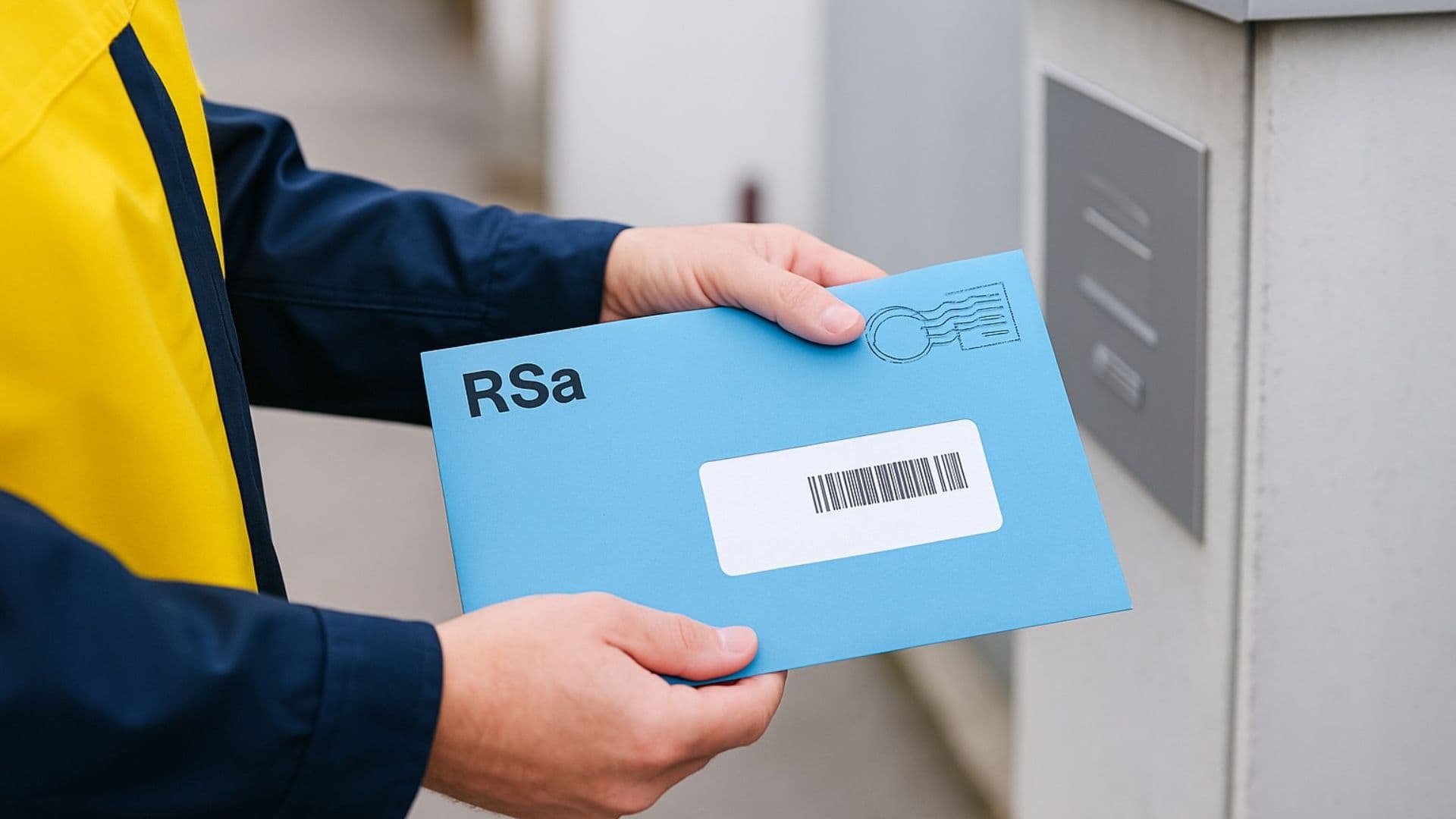
RSa: personal delivery, blue envelope
RSb: a substitute recipient is allowed, white envelope
Registered post ≠ official service
Why post still matters in the digital age
Even though email and digital communication have become the standard, post still plays a central part in everyday business. For official documents, notices from authorities and legally binding correspondence in particular, physical post remains indispensable. Austrian Post offers various delivery types that can be chosen according to how important the contents are and what the law requires.

Why traditional post is still relevant in business
Despite digitisation, physical post offers decisive advantages:
Legal certainty when delivering important documents
Proof of receipt through a delivery confirmation
More attention from the recipient than a digital message
A legal obligation for certain official notices
Ordinary postal items and what sets them apart
Standard letter
The standard letter is the simplest form of post, with no particular requirements and no way to track it.
It suits everyday correspondence with no high priority or legal significance.
Registered post: proof of delivery
Registered post offers greater security for important items. Every registered item gets a unique registration number that allows the route to be tracked. One key advantage is the flat-rate insurance against loss, theft or damage up to a value of EUR 75 or EUR 100.
Particularly important for companies: registered post alone does not automatically count as legally valid proof of delivery.
The burden of proving successful delivery lies in principle with the sender. Austrian Post does offer paid additional services such as a handover receipt or the "in person" service, which can serve as proof of delivery.
Cash on delivery: payment on handover
Cash on delivery is a particular service for senders who want payment on handover. The sender can set any amount, which the recipient has to pay before the item is handed over. Once collected, the amount is transferred to the bank account the sender specified.
Mail-order companies often offer this as an additional payment method alongside prepayment, card payment or invoice. The maximum amount for cash on delivery in Austria is EUR 3,500. Note that this delivery type is usually more expensive than other payment methods because of the extra effort involved.
Insured items: security for valuable contents
If the value of an item exceeds EUR 75, it should be declared as an insured item, using the special insured-letter envelopes. Typical contents are bank cards, jewellery, cash and valuable documents. Items worth EUR 1,500 or more also have to be sealed.
Official service: RSa and RSb letters
A particular feature of the Austrian postal system is official service by RSa and RSb letter. These forms of delivery are regulated by law and have particular legal effects.

The RSa letter: the "blue letter" for personal delivery
The RSa letter, also known as the blue letter, is an official document that may only be handed over against a signature to the actual recipient in person. This is also called delivery "into your own hands".
Key features of the RSa letter:
Recognisable by the blue envelope
Personal delivery only to the recipient or a person holding a postal authorisation
Its use has to be expressly ordered in the relevant statute
If nobody is in, an attempt at deposit is made and a notice left in the letterbox
Typical RSa letters are:
Court documents (judgments in criminal matters, summonses)
Administrative penalties and penal orders
Call-up orders from the Austrian armed forces
Data protection disclosures from authorities
There are two kinds of RSa letter: "ordinary" ones, which may also be handed to an authorised representative, and those marked "not to authorised representatives", which the recipient has to accept in person.
The RSb letter: official service with wider options for receipt
The RSb letter is also an official document, but with less strict delivery rules than the RSa. It is sent in a white envelope and can be delivered to a substitute recipient.
Key features of the RSb letter:
Recognisable by the white envelope
Delivery to a substitute recipient is possible (members of the household, employees or employer)
Deposit at the responsible post office is possible
Typical RSb letters are:
Official notices
New passports
The key differences between RSa and RSb letters
The main difference lies in the delivery rules:
Who may receive it:RSa letter: only the addressee in person or an authorised representativeRSb letter: also a substitute recipient such as a family member or a colleague
Legal significance:RSa letter: for particularly important official notices that have to be delivered in personRSb letter: for official documents with lower delivery requirements
Envelope colour:RSa letter: blueRSb letter: white
The delivery process and deadlines for official items
With official items the delivery deadlines matter a great deal, because they often carry legal consequences. If the recipient of an RSa or RSb letter cannot be reached, the document is deposited at the nearest post office and a notice is left in the letterbox.
Worth noting: once the period stated on the deposit notice begins, the document counts as delivered even if it is never collected. That can be critical for appeal deadlines, since failing to collect in time can mean missing an important deadline.
Since 1 January 2008 only one delivery attempt is provided for, as the second attempt customary before then proved inefficient.
What to watch for when using coworking spaces and virtual offices
Companies that have set up their business address in a coworking space or a virtual office need to take particular care when it comes to receiving important post. Official service such as an RSa or RSb letter can start legal deadlines running, and those run even if the letter was merely deposited. It is therefore essential to make sure the provider guarantees reliable receipt and forwarding of post — ideally with a delivery authorisation or defined internal processes for registered and official letters.
Deemed delivery and liability at a third-party address
If an official letter is deposited for a business address at a coworking space or virtual office and is not collected promptly, deemed delivery can apply. That means the document counts as delivered even though nobody collected it in person. For companies that creates an increased liability risk, particularly if deadlines for objections or appeals are missed. It is advisable to make clear arrangements with the provider about receiving post and, where appropriate, to issue an authority to accept it, in order to avoid legal disadvantage.
Digital developments in postal delivery
Interestingly, despite growing digitisation, RSa and RSb letters are currently not delivered to the post office's electronic letterbox, because the law does not provide for it. That underlines the particular legal weight of these official forms of delivery, which still have to happen physically.
Tips for companies on sending post properly
Choosing the right delivery type matters if you want to communicate efficiently and on a sound legal footing:
Important contract documents: use registered post or an insured item
Reminders and terminations: registered post with return receipt as proof of delivery
Valuable documents: send as an insured item with appropriate cover
Items to be paid for: use cash on delivery as a secure payment method
In conclusion: the right delivery type for every situation
Even in an age of digitisation, physical post remains an important part of business communication. The right delivery type depends on the contents, the legal significance and the value of the item. With official letters in particular, the distinction between RSa and RSb matters a great deal.
Companies are well advised to know the different delivery types and use them deliberately, so that communication is legally sound and important documents arrive reliably. Despite the digital shift, physical post — official service above all — will keep playing an important part.
Related Articles

Flexible work in Europe 2025: a comprehensive case study
Hybrid work dominates the European world of work. Companies benefit from better talent retention and more efficient use of space. Employees gain time and autonomy. The data shows a market that has matured, with rising demand for coworking and digitally supported ways of working.

The cost advantages of a private office or coworking space in winter
Winter 2025 brings an unprecedented wave of costs for companies, freelancers and employees working from home.

Renting an office in Hamburg 2025: rents, best locations and tips
Hamburg is one of the most interesting office markets in Germany. City centre, HafenCity or City-Süd: find out which locations offer the best opportunities in 2025, what rents look like and what to watch for in a contract.