
So what exactly is coworking?
Coworking is a flexible way of working in which freelancers, start-ups and companies share open or shared offices. Instead of renting fixed premises, members book desks, meeting rooms and communal areas as they need them.
Coworking as a concept began in the United States and has since established itself in Europe too. Translated literally, "coworking" simply means working together. In practice it describes considerably more: a coworking space is a workplace or office you can rent flexibly in a shared environment, where creative and self-employed people often work side by side on their projects, individually or together.
What makes a coworking space special is how flexible it is. Everyone decides for themselves how often and how long they use it — by the hour, for a day or across several weeks. That makes coworking a cost-effective alternative to renting an office of your own.
Besides a desk, a coworking space offers infrastructure that makes work easier: fast internet, printers, scanners, phone systems, projectors and, where needed, meeting rooms. This gives you a professional working environment without high fixed costs — ideal for freelancers, start-ups and companies that want flexible arrangements.
The first coworking space opened in San Francisco in 2005.
The advantages of coworking
The growing popularity of coworking spaces comes down to the many advantages they offer:
A quick start: a coworking space has everything you need to begin working straight away.
Flexible terms: by the hour, the day, the week or the month — contracts in coworking spaces are usually very flexible.
Flexible use: the rooms themselves are just as flexible. For projects or fast-growing companies it is a considerable advantage to be able to add space at short notice.
Innovation and inspiration: the mix of people in a coworking space leads to interesting collaborations that can open up a new perspective.
A prime location: most coworking spaces sit in the city centre or in sought-after districts where few could otherwise afford an office.
Good coffee: the coffee in coworking spaces is usually good and included in the price — not to be underestimated over a long working day.
Shared areas: unlike a conventional office, coworking spaces often offer a variety of rooms and areas that everyone can use.
Cost: a place in a coworking space is usually far cheaper than a normal office, which makes it ideal for freelancers and founders.
Using resources sparingly: sharing rooms and equipment saves not only money but resources.
Shared events: many coworking spaces regularly organise events of all kinds, which makes them ideal for networking and strengthens the sense of community.
Who uses coworking spaces?
Coworking is particularly attractive to:
Freelancers and the self-employed: flexible working fits their everyday work perfectly.
Start-ups: young companies avoid expensive office rent and benefit from an inspiring environment.
Digital nomads: coworking spaces offer reliable infrastructure for working independently of location.
Companies and corporations: many companies now use coworking spaces to house teams for a project or to make flexible working possible.

Finding the right coworking space – what to look for
There are coworking spaces in almost every city by now — but which one is right for you? Whether you are a freelancer, a founder or a remote worker, the space you choose can have a considerable effect on your productivity and how comfortable you feel. Here are some important factors to weigh up before deciding.
1. Opening hours: early bird or night owl?
Not everyone works nine to five. The good news: many coworking spaces have flexible opening hours, some around the clock. Larger membership packages often include a key or door code so you have access 24/7. Perfect for anyone who likes to work when inspiration strikes.
2. Trial offers: test first, decide later
Before you commit to a coworking space for the long term, check whether they offer day passes or trial rates. That lets you find out at your own pace whether the atmosphere suits you and whether you feel comfortable there. Nothing matters more than a working environment that fits how you work.
3. Fixed or flexible desk?
Do you like sitting at the same desk every day, leaving your things there and setting it up your way? Or are you the flexible type who simply takes whatever is free? Many coworking spaces offer both:
Fixed desk: your own desk, which nobody else uses.
Flex desk: a flexible workplace — you pick a new spot each day.Both have their advantages; the choice depends on how you prefer to work.
4. Who works there? The community matters
One often underrated question is this: who will you be sharing your workspace with? Depending on the industry and focus of the space, the atmosphere can differ a great deal. Some spaces are dominated by creatives and start-ups, others by tech specialists or consultants. Think about whether a quiet environment matters more to you, or whether you are looking for networking and exchange.
5. Extras and equipment: what do you actually need?
Coworking spaces usually offer more than a desk and a chair. Think about which extras matter to you:
Coffee and tea included ☕
Meeting rooms for client conversations 📅
Table football or lounge areas for creative breaks 🎱
A business address for your company. Every coworking space has its own concept — work out which of these you cannot do without. 🏢
Coworking spaces as the birthplace of success stories
Coworking spaces have long been more than shared offices — they are creative breeding grounds for innovation and successful start-ups. Many companies known worldwide today have their roots in such flexible environments. Here are a few examples:
Airbnb: from a coworking space to a global accommodation platform
Airbnb's founders began their journey in a coworking space in San Francisco. What started as a simple idea — sharing living space — grew, with the support and feedback of the community, into one of the largest accommodation platforms in the world.
Spotify: music streaming out of a coworking space
The people behind Spotify also started their success story in a shared workspace in Stockholm. The creative environment and the exchange with other innovative minds helped them develop an entirely new kind of music streaming — today millions of people worldwide use Spotify.
Instagram: the photo app from a coworking space
Instagram's founders launched their app from the coworking space Dogpatch Labs in San Francisco. The flexibility and the collaborative atmosphere played a decisive part in turning their vision into reality. Today Instagram is among the most widely used social networks in the world.
Uber: the idea behind a revolution in mobility
Uber is another example of a revolutionary idea that began in a coworking space in San Francisco. Its founders took inspiration there and developed a transport concept now used in more than 80 countries.
"I have not failed. I've just found 10,000 ways that won't work." Thomas A. Edison

In conclusion
For the self-employed, freelancers and digital nomads who have no office of their own and do not want to work from home, a coworking space is the ideal answer. With locations across Germany there is a space to suit every need and every way of working.
One considerable advantage of coworking spaces is higher productivity compared with working from home. There are fewer distractions, since everyone around you is working with focus — and that motivating atmosphere tends to be contagious. At the same time these environments offer excellent opportunities to network and exchange ideas. New contacts and conversations can provide valuable impulses, spark creativity and raise motivation.
Coworking spaces therefore combine an inspiring community with a professional working environment, and open up new opportunities at the same time — whether through productive work or through valuable business connections.
Related Articles

Flexible work in Europe 2025: a comprehensive case study
Hybrid work dominates the European world of work. Companies benefit from better talent retention and more efficient use of space. Employees gain time and autonomy. The data shows a market that has matured, with rising demand for coworking and digitally supported ways of working.
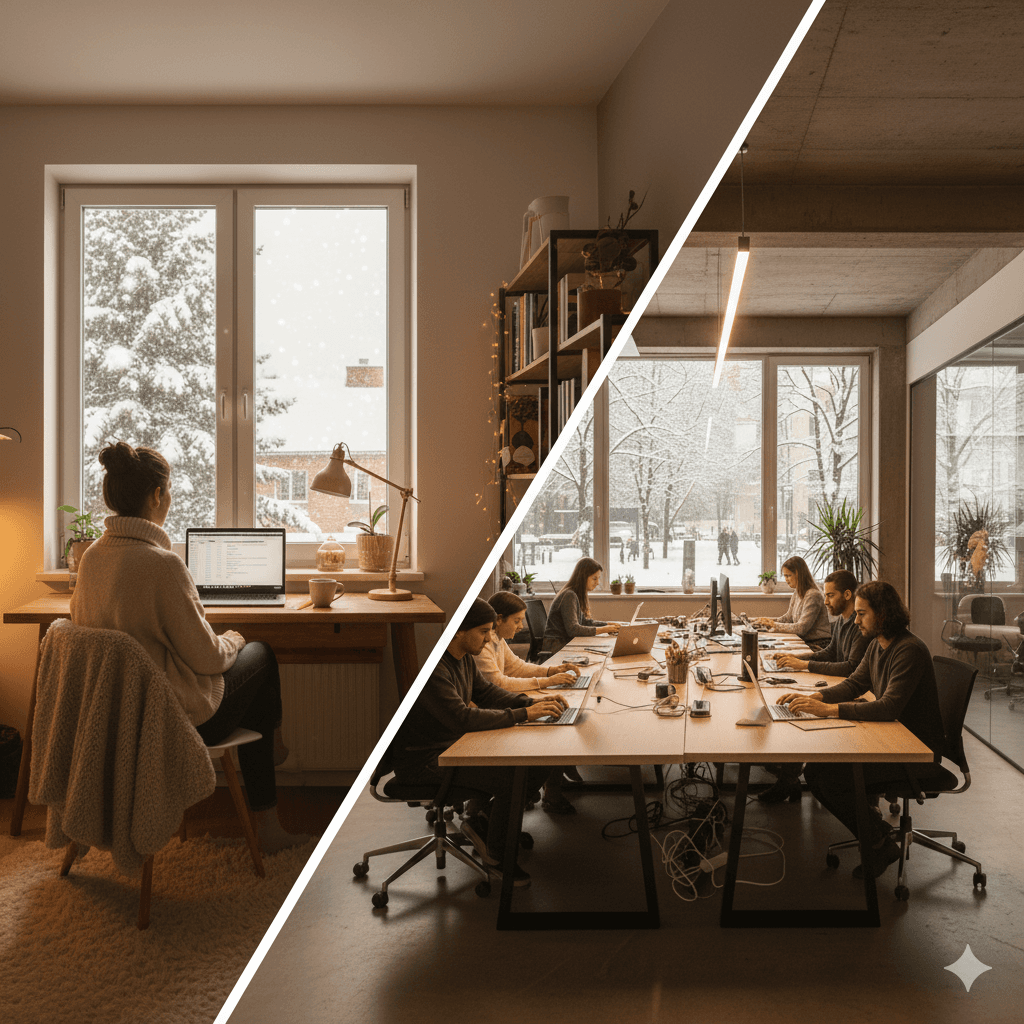
The cost advantages of a private office or coworking space in winter
Winter 2025 brings an unprecedented wave of costs for companies, freelancers and employees working from home.
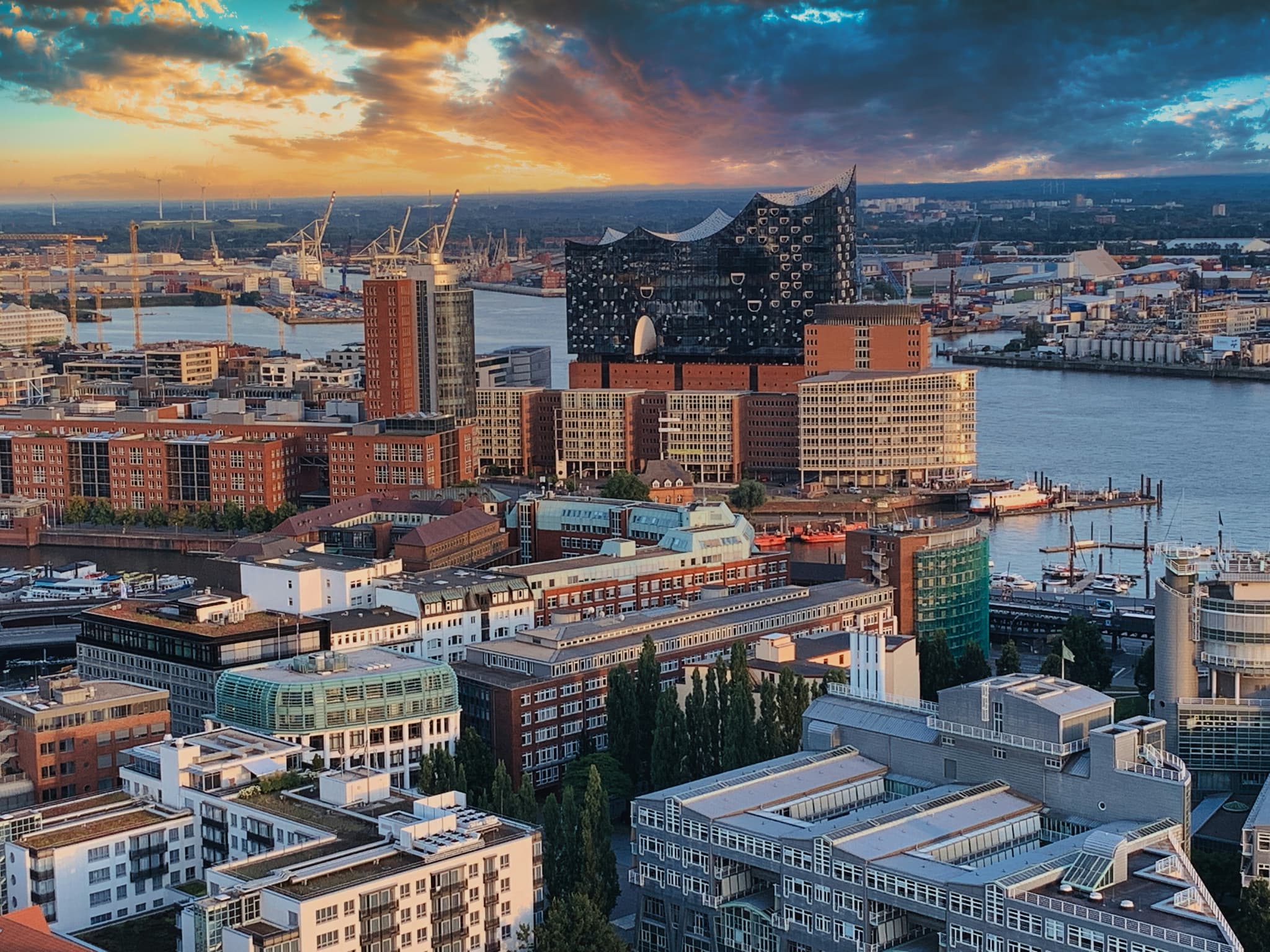
Renting an office in Hamburg 2025: rents, best locations and tips
Hamburg is one of the most interesting office markets in Germany. City centre, HafenCity or City-Süd: find out which locations offer the best opportunities in 2025, what rents look like and what to watch for in a contract.