
Coworking spaces: a proven springboard for start-ups
Over recent years coworking spaces have become a central building block in the success of many start-ups. The expansion is striking – in Germany alone the number of coworking spaces has more than sextupled since 2018, reaching 1,852 locations in 2024 – and it shows how much this way of working has grown in importance. These spaces offer far more than desks and wifi; they are ecosystems that support growth, innovation and collaboration, which makes them ideal breeding grounds for successful new companies.
The coworking boom in numbers
The development of the coworking market is remarkable. Since 2020 the number of spaces in Germany has risen by around 50 per cent, underlining the continuing demand for flexible workplaces. This expansion is not limited to Germany – globally, the market for coworking space services was estimated at 48.38 billion US dollars in 2023 and is expected to grow to 107 billion US dollars by 2032, at an annual growth rate of around 9.22 per cent.
In Germany most coworking spaces are concentrated in the most populous federal states: North Rhine-Westphalia (354), Bavaria (302) and Baden-Württemberg (234). At city level, Berlin (221), Munich (114) and Hamburg (101) lead the list. What is particularly notable, though, is that coworking has long stopped being a purely urban phenomenon – its spread in rural regions is growing markedly, with the number of towns and municipalities with coworking spaces up more than 70 per cent since 2020, to 572.
Cost efficiency and flexible working models
Coworking spaces give start-ups a cost-effective alternative to traditional offices, which usually come with long leases and high fixed costs. According to industry experts, a coworking desk costs around half of what a comparable desk in your own office works out at. That substantial saving lets young companies deploy their limited financial resources strategically. Start-ups often work remotely at first, so there is no need for a physical office at all and a virtual office is frequently enough.
Flexible membership models make it possible to scale up or down quickly as the business develops. Start-ups can concentrate capital on their core business rather than investing in expensive infrastructure. In the fast-moving start-up world, where growth phases and team sizes can vary sharply, that flexibility is a decisive advantage.
With a projected market value of 15 billion US dollars in 2024 for flexible workspace solutions, expected to reach 30 billion US dollars by 2032, the economic weight of these offerings is clear.
Coworking spaces give start-ups a cost-effective alternative to traditional offices, which usually come with long leases and high fixed costs.
Flexible membership models make it possible to scale up or down quickly as the business develops. Start-ups can concentrate capital on their core business.
Networking and collaboration
Exchange with other founders, freelancers and specialists is an essential success factor for start-ups. Coworking spaces have many advantages and create an environment that encourages and accelerates those encounters.
Coworking spaces foster a culture of openness that allows both spontaneous conversations and planned networking events. This networking potential is a main reason why more and more start-ups and entrepreneurs choose this way of working. Being able to meet founders from other industries creates valuable synergies and opens doors to new business opportunities.
Daily encounters and targeted events open doors to partnerships, mentoring and potential investors. In an industry where contacts can decide between success and failure, coworking spaces offer a natural and productive way to build a network.
Exchange with other founders, freelancers and specialists is an essential success factor.
Coworking spaces foster a culture of openness that allows spontaneous conversations and planned networking events.
Daily encounters and targeted events open doors to partnerships, mentoring and investors.
An environment that encourages innovation
Coworking spaces create an environment that encourages experimentation and a willingness to take risks. The dynamic atmosphere inspires and motivates, which can be invaluable in the early stage of a start-up.
Proximity to other start-ups and specialists fuels the exchange of ideas and can lead to unexpected collaborations and innovations. That creative friction is a key ingredient in what makes many coworking spaces work.
Access to workshops and targeted coaching speeds up the development of business models and helps avoid typical early-stage problems, or solve them more efficiently.
Coworking spaces create an environment that encourages experimentation and a willingness to take risks.
Proximity to other start-ups and specialists fuels the exchange of ideas.
Access to workshops and targeted coaching speeds up the development of business models.
Examples: successful companies that started in a coworking space
Globally known companies such as Uber, Dropbox and Instagram had their beginnings in coworking spaces. These success stories underline the potential of such environments as catalysts for entrepreneurial success.
Dropbox, founded in 2007 by Drew Houston and Arash Ferdowsi, began in a coworking space in San Francisco. The founders benefited from the networking, the shared resources and the innovative atmosphere, all of which helped them refine and develop their product.
Similarly, Uber, founded in 2009 by Travis Kalanick and Garrett Camp, used coworking spaces in San Francisco to build and test its transport platform. The flexibility and cost savings that coworking brought were decisive factors in the company's early development.
This environment acts as a springboard for start-ups worldwide, offering not only infrastructure but access to a community of peers and potential employees, partners and investors.
A professional environment and company culture
Coworking spaces offer a professional setting that helps build a motivating company culture. They come with professional infrastructure and resources such as fast internet, meeting rooms, printers and scanners, and often kitchens and lounge areas too.
This equipment lets start-ups concentrate on their actual work instead of organisational detail. The professional surroundings also provide a presentable setting for client meetings and business appointments.
Individual ways of working and creativity have their place too, since most coworking spaces offer different areas for different needs – from quiet zones for focused work through to open areas for collaboration and exchange.
Coworking spaces offer a professional setting that helps build a motivating company culture.
Individual ways of working and creativity have their place too.
Current trends in coworking
The coworking market is becoming more differentiated, with specialised offerings for different audiences. The dedicated desk segment was worth around 10 billion US dollars in 2024 and is expected to double to 20 billion US dollars by 2032. These fixed desks are particularly valued by freelancers and small companies that want a defined workspace while still enjoying the benefits of a coworking environment.
Another interesting development is that not only start-ups and freelancers but increasingly large corporations and mid-sized companies are turning to coworking spaces, to offer flexible working arrangements and benefit from the innovative atmosphere. That mix enriches the coworking ecosystem further.

In summary: why coworking spaces work so well for start-ups
Coworking spaces address the central challenges start-ups face: they lower costs, reduce risk, encourage networking and give access to resources that would otherwise be hard to reach. With more than 1,852 locations in Germany alone and projected global market growth to 107 billion US dollars by 2032, they have become an indispensable part of the start-up ecosystem.
The success stories of numerous start-ups such as Dropbox and Uber, which began in coworking spaces, show what they mean for the innovation and founder scene. The continuing shift in the world of work, with rising demands for flexibility, sets up the conditions for further growth in demand for coworking, and supports the continued growth of this market segment.
At a time when agility, networking and efficient use of resources are decisive success factors, coworking spaces offer exactly the environment start-ups need for sustainable growth. They are not just places to work but innovation hubs with the potential to produce the next generation of successful companies.
Related Articles

Flexible work in Europe 2025: a comprehensive case study
Hybrid work dominates the European world of work. Companies benefit from better talent retention and more efficient use of space. Employees gain time and autonomy. The data shows a market that has matured, with rising demand for coworking and digitally supported ways of working.
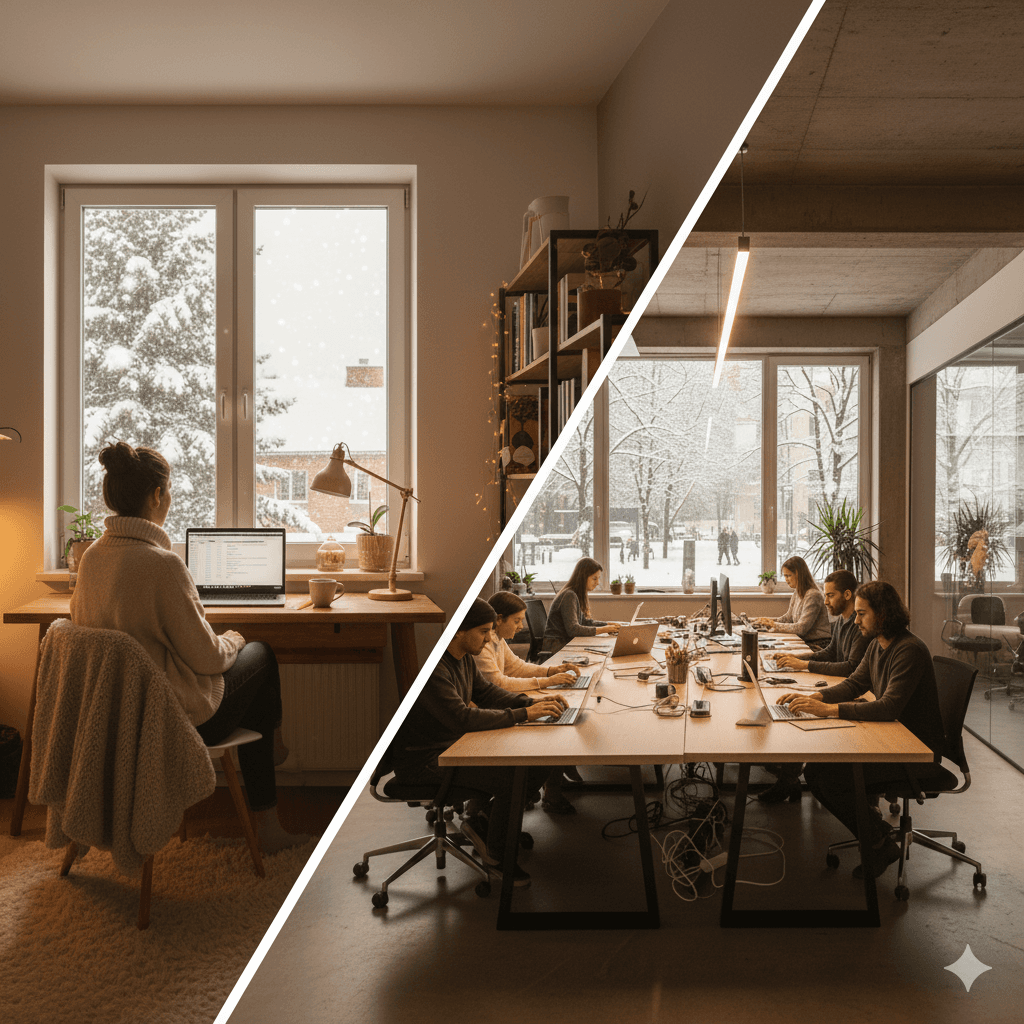
The cost advantages of a private office or coworking space in winter
Winter 2025 brings an unprecedented wave of costs for companies, freelancers and employees working from home.

Renting an office in Hamburg 2025: rents, best locations and tips
Hamburg is one of the most interesting office markets in Germany. City centre, HafenCity or City-Süd: find out which locations offer the best opportunities in 2025, what rents look like and what to watch for in a contract.