Renting an office in Berlin: the overview for 2025
Berlin is Germany's most dynamic office location: from premium addresses at Potsdamer Platz through creative lofts in Mitte to flexible coworking spaces. Find out which rents are realistic in 2025, which districts are worth it for your company and how to negotiate contracts wisely.
22 Min. Reading Time
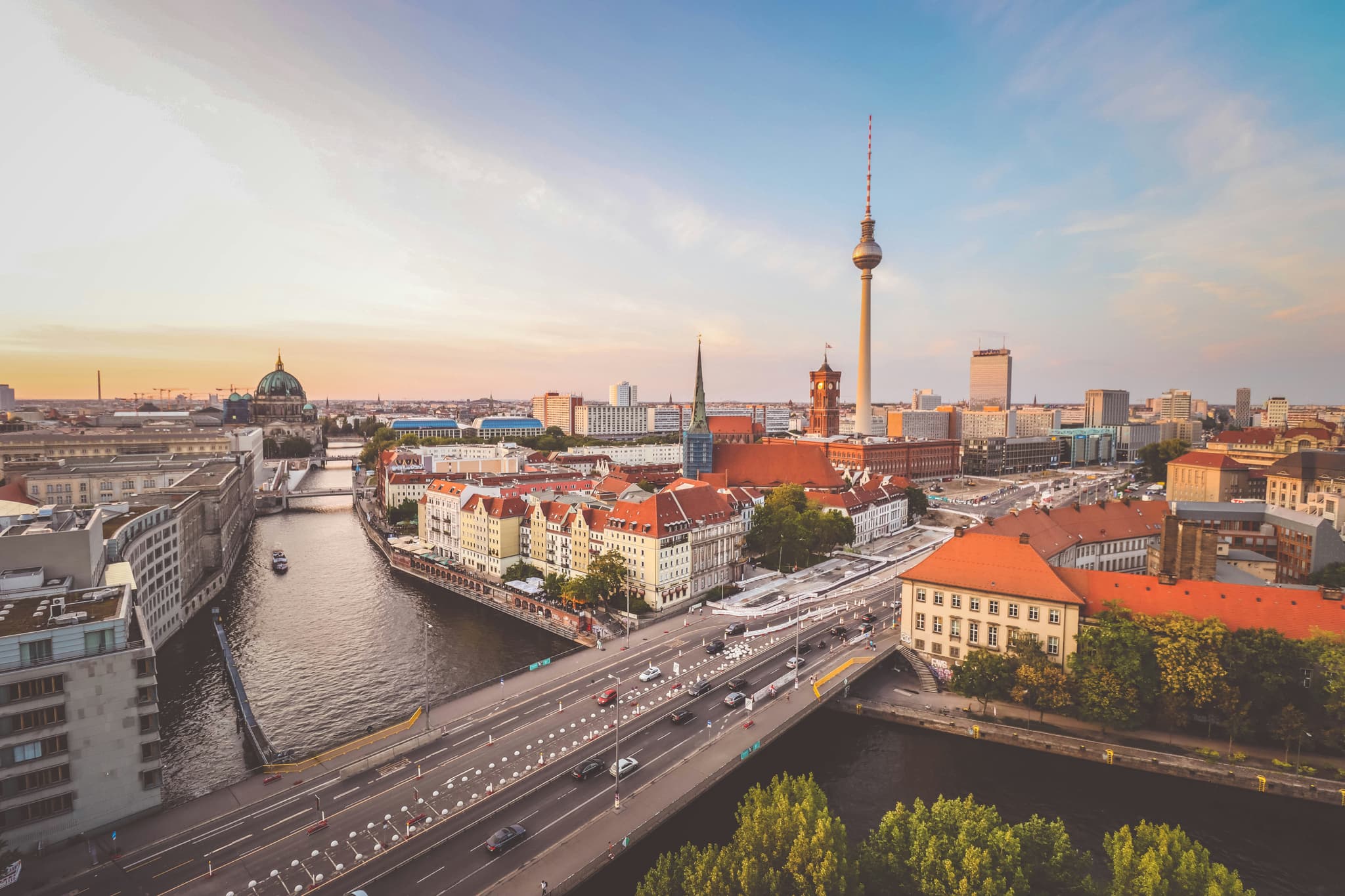
Berlin is not only Germany's capital but one of the most important office locations in Europe. The city brings together politics, international corporations, start-ups, the tech scene, the creative industries and public administration. Nowhere else in Germany do companies find such a wide variety of locations, spaces and rental models. Anyone looking to rent an office in Berlin faces a complex decision, though. The range runs from state-of-the-art new builds in the government quarter through historic period space in fashionable districts to flexible coworking arrangements in nearly every part of the city.
Within the same city, Berlin combines prime rents above EUR 45 per square metre with cheap alternatives from about EUR 17 per square metre. This spread is unique in Germany in this form and makes very different location strategies possible within one city.
This guide takes you step by step through the Berlin office market in 2025. You will find out how the market is developing, which locations are particularly attractive, what rents look like, which trends are shaping demand and what to watch for in contract negotiations. The aim is that you can make the right decision for your company with clear information, practical examples and well-founded data.

The Berlin office market at a glance in 2025
With more than 20 million square metres of office space, Berlin is one of the largest office locations in Germany. The market is changing, though. In the boom years before 2020 space was scarce and prime rents climbed steadily. Since then the picture has changed.
Around 238,000 square metres of office space were newly let in the first half of 2025. Extrapolated to the full year that gives take-up of about 550,000 square metres. That is below the long-term average, but shows that Berlin remains a dynamic market. What stands out is that the total number of leases is high while the spaces themselves are smaller. Large deals over 10,000 square metres have become rare. Instead, medium-sized contracts between 500 and 2,000 square metres dominate.
The vacancy rate is around 8 per cent. That is considerably more than a few years ago, when vacancy stood at 2 to 3 per cent. For tenants it means the choice has grown and new room for negotiation has opened up. For owners and developers, in turn, it means demand is becoming more selective. High-quality, ESG-compliant space inside the S-Bahn ring is still sought after, while older buildings on the edge of the city are harder to let.
5 facts about the Berlin office market in 2025
Total stock: over 20 million square metres
Take-up in H1 2025: 238,000 square metres
Average rent: EUR 27 to 28 per square metre
Prime rent: around EUR 46 per square metre
Vacancy rate: about 8 per cent
This starting position creates an interesting setting for companies. On one hand Berlin is still a magnet for investors and firms from around the world. On the other, market dynamics are no longer shaped purely by scarcity. Anyone renting an office today has more scope to compare prices, choose locations and negotiate better terms.
Trends and developments
The Berlin office market is influenced by several trends in 2025. They have a direct effect on demand for space and on how prices develop.
The development around the Hauptbahnhof and in Europacity has shifted the balance between new-build and existing space considerably. For tenants that means a better choice of efficient floor plans and higher technical building quality.
Central locations are still preferredCompanies still favour the inner city, particularly space inside the S-Bahn ring. Connections to public transport, airports and business partners are best here.
Sustainability is a mustBuildings with ESG certification (LEED, BREEAM, DGNB) are in strong demand. Many corporations now rent only space that meets their sustainability criteria. That improves the prospects of modern green buildings and makes new projects more competitive.
Hybrid ways of working are changing space requirementsWith working from home and flexible arrangements, companies need less conventional office space per employee. At the same time demand for meeting and collaboration rooms is growing.
Coworking and serviced offices are boomingStart-ups and smaller firms in particular use flexible models that avoid long contractual commitments. Berlin has the widest choice in Germany here.
Different market conditions across the districtsWhile prime locations such as Potsdamer Platz or Kurfürstendamm hold high rents, considerably cheaper terms are available in outer areas such as Adlershof or Schönefeld.
These trends show that the market has become more differentiated. It is worth tenants defining their own strategy precisely. Anyone who needs flexibility can use coworking. Anyone who wants to make a presentable impression pays more in the city but has a prestigious address. Anyone who wants to save money will find good alternatives on the edge of the city.

The best office locations in Berlin
Berlin is a city of contrasts. Every district has its own character and appeals to different people. Here is an overview of the most important office locations:
Table of rents for office locations in Berlin
Location | Average rent (EUR/m²) | Prime rent (EUR/m²) | What sets it apart |
|---|---|---|---|
Potsdamer Platz | 40–50 | up to 60 | International corporations, prestige |
Kurfürstendamm | 35–45 | up to 60 | Tradition, retail, law firms |
Alexanderplatz | 30–40 | up to 48 | Tech companies, central connections |
Friedrichstraße | 32–40 | up to 46 | Near the government quarter, banks |
Mediaspree | 23–32 | up to 38 | Start-ups, media, modern architecture |
Hackescher Markt | 25–30 | up to 35 | Creative scene, period buildings |
Adlershof | 17–20 | up to 23 | Science and technology park |
Schönefeld | 18–22 | up to 24 | Near BER airport, logistics |
Potsdamer Platz and Leipziger Platz
Potsdamer Platz is one of Berlin's best-known addresses. Modern high-rises with high-quality facilities stand here. International corporations such as Sony and Daimler have their German headquarters here. For companies looking for maximum standing, this location is ideal.
Advantages: central location, excellent transport links, international appeal
Disadvantages: very high rents, limited space available
Rents: EUR 35 to 60 per square metre
Kurfürstendamm
The Ku'damm is the heart of the west. Shops, restaurants, law firms and consultancies line this grand boulevard. An office here conveys tradition and seriousness.
Advantages: prestige, a strong neighbourhood of service providers, good infrastructure
Disadvantages: traffic, expensive
Rents: EUR 25 to 60 per square metre
Alexanderplatz
Alexanderplatz is a lively transport hub with excellent S-Bahn and U-Bahn connections. Tech companies, start-ups and international firms wanting visibility and a central position settle here above all.
Advantages: a very central location, modern surroundings, a wide choice of places to eat
Disadvantages: a hectic setting, little quiet
Rents: EUR 30 to 48 per square metre
Friedrichstraße and Unter den Linden
Friedrichstraße is regarded as the classic business address in Berlin. Banks, law firms, associations and consultancies are at home here. If you want a presence near the government quarter, this is the place.
Advantages: close to politics, a high-calibre neighbourhood, a central location
Disadvantages: rents in the upper segment
Rents: EUR 32 to 46 per square metre
Hauptbahnhof and Europacity
A new business quarter has grown up around Berlin's Hauptbahnhof in recent years. Modern office buildings with flexible floor plans and excellent connections make this location attractive to international firms.
Advantages: excellent connections, modern new builds, an international atmosphere
Disadvantages: less established structures, high prices in places
Rents: EUR 35 to 45 per square metre
Hackescher Markt and Berlin-Mitte
Hackescher Markt is the heart of the creative scene. Agencies, fashion firms and start-ups sit here. The mix of historic period buildings and modern lofts makes for a unique flair.
Advantages: creative surroundings, highly attractive to young employees, many cafés and restaurants
Disadvantages: space is often small and scarce, demand is high in places
Rents: EUR 25 to 35 per square metre
Mediaspree
Mediaspree, between Friedrichshain and Kreuzberg, has become one of the most dynamic development areas. Media companies, start-ups and tech firms sit here. Modern architecture and the waterside position make this location special.
Advantages: dynamic surroundings, modern space, a fashionable location
Disadvantages: construction and development still under way
Rents: EUR 23 to 38 per square metre
Adlershof and Schönefeld
Adlershof is Berlin's science city. Research institutions, laboratories and technology companies shape the location. Schönefeld benefits from being close to BER airport.
Adlershof is regarded as one of the largest science and technology parks in Germany. For companies with laboratory or development needs, the synergies with research institutions are a real economic advantage.
Advantages: cheap, easy to reach, a strong technology environment
Disadvantages: longer journeys into the centre, less prestige
Rents: EUR 17 to 23 per square metre
This makes it clear: Berlin has a suitable location for every need. Anyone betting on prestige chooses Potsdamer Platz or Kurfürstendamm. Anyone looking to be near the creative scene decides on Mitte or Mediaspree. Anyone who wants to save will find attractive alternatives in Adlershof.

Which districts in Berlin are the cheapest alternatives to the centre in 2025, and when are Adlershof or Schönefeld worth it compared with Mediaspree or Alexanderplatz?
Anyone looking to optimise costs will find very competitive terms in Adlershof, in parts of Lichtenberg or in areas south of the ring. In Adlershof you get modern buildings in a technology-focused setting, often with rents from about EUR 17 per square metre. These locations score on being easy to reach by S-Bahn and motorway, on homogeneous commercial structures and on running costs you can plan for. Schönefeld benefits from being close to the airport and suits companies with international travel or logistics connections particularly well. Prices here are usually lower than in the prime locations, at the price of longer journeys into the centre.
Mediaspree and Alexanderplatz remain first addresses where visibility, urban life and proximity to talent are the priority. Rents are higher here, but the space is generally positioned so that restaurants, services and public spaces are within walking distance. For teams that receive many outside visitors, that density can create value justifying the price. For R&D-heavy firms and knowledge-intensive production, Adlershof and the areas adjoining it are often the better choice, because proximity to laboratories, campus structures and the option of expanding into more space are central.
A simple decision logic helps. If proximity to clients, standing and appeal to employees in an urban setting are the goal, look first at Mitte, Potsdamer Platz, Ku'damm and Mediaspree. If running costs, parking, the shape of the space and the ability to expand matter more, look at Adlershof, Schönefeld and well-connected outer areas along the S-Bahn lines. Test your team's commuting times against real journeys. An average saving of 10 minutes per journey can free up several thousand working hours a year across 100 employees, and so put the higher rent of central locations into perspective.
Rents and costs in Berlin
Rents in Berlin vary a great deal. Prime locations such as Potsdamer Platz or the Ku'damm reach up to EUR 60 per square metre. Creative districts such as Hackescher Markt lie between EUR 25 and 35. Outer areas such as Adlershof are available from EUR 17 per square metre.
On top of the cold rent come running costs of between EUR 4 and 8 per square metre. For a 200-square-metre office in Mediaspree at a base rent of EUR 30 per square metre that means:
Base rent: EUR 6,000
Running costs: EUR 1,200
Total: EUR 7,200 a month
Besides ongoing costs, companies also have to reckon with one-off outlays:
Agent's commission: 1 to 3 months' rent
Deposit: 2 to 6 months' rent
Fit-out or renovation: EUR 100 to 300 per square metre
Flexible office solutions in Berlin: coworking and serviced offices
Berlin is Germany's capital of coworking spaces. More than 200 providers are active here, from international brands such as WeWork and Mindspace to local providers such as St. Oberholz. Prices are comparatively moderate and offer an ideal answer for start-ups and small teams.
Flex desks | EUR 200–350 | a month |
Fixed desks | EUR 300–500 | a month |
Private office | EUR 800–1,500 | a month |
Serviced offices are the next step up. Here companies rent fully equipped offices including reception, IT support, cleaning and meeting rooms. They are more expensive, but offer maximum flexibility and comfort.
For firms that value standing without wanting to commit long term, serviced offices are the perfect answer.
What does renting an office in Berlin Mitte, Potsdamer Platz and Kurfürstendamm cost per square metre in 2025, and what explains the differences?
The range of net cold rents in the prime locations is wide. In Berlin Mitte around Hackescher Markt and Alexanderplatz, much modern or well-refurbished space lies in the region of EUR 25 to 48 per square metre. At Potsdamer Platz, top properties reach values of around EUR 60 per square metre, particularly landmark addresses with very good facilities, high energy efficiency and a presentable lobby. On Kurfürstendamm the rent varies a great deal with the micro-location and the quality of the building. Classic addresses with high visibility and a retail connection are frequently well above EUR 30 per square metre and can also reach EUR 50 to 60 per square metre at the top end.
Why these differences arise comes down to three factors. First, the quality of the location, which in Berlin is determined not only by distance from the centre but by public transport access, visibility and the neighbourhood. Second, the quality of the property: the year of refurbishment, the building services, the efficiency of the space, room depths, natural light and ESG standard. Third, the market dynamics of the sub-markets. Berlin Mitte and Potsdamer Platz attract internationally active companies looking for presentable addresses. Willingness to pay for quality is higher in that group. The Ku'damm also combines brand presence, high-quality restaurants and a historically grown reputation, which is reflected in the price.
For comparison it is worth calculating the effective rent over the term. An offer in Mitte at EUR 40 per square metre can, with six rent-free months and a fit-out contribution, end up cheaper than EUR 36 on the Ku'damm with no incentives. What matters is that you bring every item, running costs included, into one consistent model and record your assumptions transparently.
Leases in Berlin: what to watch for
Commercial leases differ considerably from residential ones. They offer more scope but also demand more attention.
Contract terms: from 12 months up to 10 years
Notice periods: usually 6 to 12 months
Rent adjustments: frequently index-linked or stepped rent
Renovation: decorative repairs usually the tenant's job, modernisation the landlord's
Additional benefits: rent-free periods, parking and the use of communal areas can be negotiated
One important tip: have contracts checked by a specialist lawyer. Many clauses are negotiable and can make a considerable difference to costs over time.
What to look for in the perfect office
Several factors play a part in deciding on an office:
Location: proximity to clients, partners and public transport.
Budget: besides the rent, take running costs, the deposit and fit-out into account.
Infrastructure: internet, phone, conference rooms and break areas are decisive.
Flexibility: rooms should be able to expand or be divided, so you can grow or shrink.
Employee satisfaction: attractive surroundings encourage motivation and keep talent.
Negotiating tips
The Berlin market offers room to manoeuvre that you should use.
Compare several offers so you negotiate from a strong position.
Highlight your creditworthiness to build trust.
Negotiate rent-free periods or fit-out contributions.
Watch the running costs and negotiate upper limits.
Check the running costs: always work out the total costs including operating costs, parking and service charges — that way you avoid nasty surprises.Secure room to grow: negotiate options to expand or to use space flexibly, so your office can follow your company's development.Use incentives: look not only at the price per square metre but at rent-free periods or fit-out contributions, which lower the effective rent.Mind ESG: buildings with a good energy certificate lower operating costs and improve your image as an employer at the same time.

Future trends
Three big trends will shape the Berlin office market in the coming years:
Sustainability: green buildings are winning through and raising property values.
Digitisation: smart offices with app control and AI-supported building services are standard.
Hybrid working: space is becoming more flexible and the classic open-plan structure is losing importance.
A practical checklist for finding an office in Berlin
Preparation:
Set the budget
Work out the space needed per employee
Define your location and fit-out requirements
Viewing:
Check the layout
Check daylight and ventilation
Test the infrastructure
Assess the neighbourhood
Afterwards:
Draw up a cost comparison
Check the contract details
Get legal advice
Quick takeaways
Average rent in Berlin in 2025: EUR 27 to 28/m²
Prime rents up to EUR 60/m² in prime locations
Vacancy rate: 8 per cent
Coworking from EUR 200 a month
More room to negotiate for tenants
In conclusion: renting an office in Berlin in 2025
The Berlin office market offers more possibilities in 2025 than ever before. Companies benefit from a wider choice, stable prices and new ideas such as coworking and the smart office. Anyone who knows their budget, chooses the right location and negotiates the lease professionally will find the ideal office space in Berlin — whether a start-up, a mid-sized firm or an international corporation.
Frequently asked questions (FAQ)
What are average rents in Berlin in 2025?
The average rent is EUR 27 to 28 per square metre; prime rents reach up to EUR 60 per square metre.
What running costs come on top?
Besides the base rent, running costs of between EUR 4 and 8 per square metre are usual, plus agent's commission, deposit and fit-out costs.
Are there enough coworking options in Berlin?
Yes. Berlin is Germany's coworking capital with more than 200 providers. Flex desks are available from EUR 200 a month, private offices from EUR 800.
Which locations are in particular demand?
Potsdamer Platz: presentable and international
Kurfürstendamm: prestige and tradition
Alexanderplatz: central and well connected
Mediaspree: dynamic and modern
What should you watch for in a lease?
Check contract terms, notice periods, adjustment clauses and rules on renovation. Many points are negotiable, and a specialist lawyer is advisable.
Berlin is not only Germany's capital but one of the most important office locations in Europe. The city brings together politics, international corporations, start-ups, the tech scene, the creative industries and public administration. Nowhere else in Germany do companies find such a wide variety of locations, spaces and rental models. Up-to-date information on the location is also available from the IHK Berlin. Anyone looking to rent an office in Berlin faces a complex decision, though. The range runs from state-of-the-art new builds in the government quarter through historic period space in fashionable districts to flexible coworking arrangements in nearly every part of the city.
This guide takes you step by step through the Berlin office market in 2025. You will find out how the market is developing, which locations are particularly attractive, what rents look like, which trends are shaping demand and what to watch for in contract negotiations. The aim is that you can make the right decision for your company with clear information, practical examples and well-founded data.
The Berlin office market at a glance in 2025
With more than 20 million square metres of office space, Berlin is one of the largest office locations in Germany. The market is changing, though. In the boom years before 2020 space was scarce and prime rents climbed steadily. Since then the picture has changed.
Around 238,000 square metres of office space were newly let in the first half of 2025. Extrapolated to the full year that gives take-up of about 550,000 square metres. That is below the long-term average, but shows that Berlin remains a dynamic market. What stands out is that the total number of leases is high while the spaces themselves are smaller. Large deals over 10,000 square metres have become rare. Instead, medium-sized contracts between 500 and 2,000 square metres dominate.
The vacancy rate is around 8 per cent. That is considerably more than a few years ago, when vacancy stood at 2 to 3 per cent. For tenants it means the choice has grown and new room for negotiation has opened up. For owners and developers, in turn, it means demand is becoming more selective. High-quality, ESG-compliant space inside the S-Bahn ring is still sought after, while older buildings on the edge of the city are harder to let.
5 facts about the Berlin office market in 2025
Total stock: over 20 million square metres
Take-up in H1 2025: 238,000 square metres
Average rent: EUR 27 to 28 per square metre
Prime rent: around EUR 46 per square metre
Vacancy rate: about 8 per cent
This starting position creates an interesting setting for companies. On one hand Berlin is still a magnet for investors and firms from around the world. On the other, market dynamics are no longer shaped purely by scarcity. Anyone renting an office today has more scope to compare prices, choose locations and negotiate better terms.
Trends and developments
The Berlin office market is influenced by several trends in 2025. They have a direct effect on demand for space and on how prices develop.
Central locations are still preferredCompanies still favour the inner city, particularly space inside the S-Bahn ring. Connections to public transport, airports and business partners are best here.
Sustainability is a mustBuildings with ESG certification (LEED, BREEAM, DGNB) are in strong demand. Many corporations now rent only space that meets their sustainability criteria. That improves the prospects of modern green buildings and makes new projects more competitive.
Hybrid ways of working are changing space requirementsWith working from home and flexible arrangements, companies need less conventional office space per employee. At the same time demand for meeting and collaboration rooms is growing.
Coworking and serviced offices are boomingStart-ups and smaller firms in particular use flexible models that avoid long contractual commitments. Berlin has the widest choice in Germany here.
Different market conditions across the districtsWhile prime locations such as Potsdamer Platz or Kurfürstendamm hold high rents, considerably cheaper terms are available in outer areas such as Adlershof or Schönefeld.
These trends show that the market has become more differentiated. It is worth tenants defining their own strategy precisely. Anyone who needs flexibility can use coworking. Anyone who wants to make a presentable impression pays more in the city but has a prestigious address. Anyone who wants to save money will find good alternatives on the edge of the city.
The best office locations in Berlin
Berlin is a city of contrasts. Every district has its own character and appeals to different people. Here is an overview of the most important office locations and of rents in Berlin:
Table of rents for office locations in Berlin
Location | Average rent (EUR/m²) | Prime rent (EUR/m²) | What sets it apart |
|---|---|---|---|
Potsdamer Platz | 40–50 | up to 60 | International corporations, prestige |
Kurfürstendamm | 35–45 | up to 60 | Tradition, retail, law firms |
Alexanderplatz | 30–40 | up to 48 | Tech companies, central connections |
Friedrichstraße | 32–40 | up to 46 | Near the government quarter, banks |
Mediaspree | 23–32 | up to 38 | Start-ups, media, modern architecture |
Hackescher Markt | 25–30 | up to 35 | Creative scene, period buildings |
Adlershof | 17–20 | up to 23 | Science and technology park |
Schönefeld | 18–22 | up to 24 | Near BER airport, logistics |
Potsdamer Platz and Leipziger Platz
Potsdamer Platz is one of Berlin's best-known addresses. Modern high-rises with high-quality facilities stand here. International corporations such as Sony and Daimler have their German headquarters here. For companies looking for maximum standing, this location is ideal.
Advantages: central location, excellent transport links, international appeal
Disadvantages: very high rents, limited space available
Rents: EUR 35 to 60 per square metre
Kurfürstendamm
The Ku'damm is the heart of the west. Shops, restaurants, law firms and consultancies line this grand boulevard. An office here conveys tradition and seriousness.
Advantages: prestige, a strong neighbourhood of service providers, good infrastructure
Disadvantages: traffic, expensive
Rents: EUR 25 to 60 per square metre
Alexanderplatz
Alexanderplatz is a lively transport hub with excellent S-Bahn and U-Bahn connections. Tech companies, start-ups and international firms wanting visibility and a central position settle here above all.
Advantages: a very central location, modern surroundings, a wide choice of places to eat
Disadvantages: a hectic setting, little quiet
Rents: EUR 30 to 48 per square metre
Friedrichstraße and Unter den Linden
Friedrichstraße is regarded as the classic business address in Berlin. Banks, law firms, associations and consultancies are at home here. If you want a presence near the government quarter, this is the place.
Advantages: close to politics, a high-calibre neighbourhood, a central location
Disadvantages: rents in the upper segment
Rents: EUR 32 to 46 per square metre
Hauptbahnhof and Europacity
A new business quarter has grown up around Berlin's Hauptbahnhof in recent years. Modern office buildings with flexible floor plans and excellent connections make this location attractive to international firms.
Advantages: excellent connections, modern new builds, an international atmosphere
Disadvantages: less established structures, high prices in places
Rents: EUR 35 to 45 per square metre
Hackescher Markt and Berlin-Mitte
Hackescher Markt is the heart of the creative scene. Agencies, fashion firms and start-ups sit here. The mix of historic period buildings and modern lofts makes for a unique flair.
Advantages: creative surroundings, highly attractive to young employees, many cafés and restaurants
Disadvantages: space is often small and scarce, demand is high in places
Rents: EUR 25 to 35 per square metre
Mediaspree
Mediaspree, between Friedrichshain and Kreuzberg, has become one of the most dynamic development areas. Media companies, start-ups and tech firms sit here. Modern architecture and the waterside position make this location special.
Advantages: dynamic surroundings, modern space, a fashionable location
Disadvantages: construction and development still under way
Rents: EUR 23 to 38 per square metre
Adlershof and Schönefeld
Adlershof is Berlin's science city. Research institutions, laboratories and technology companies shape the location. Schönefeld benefits from being close to BER airport.
Advantages: cheap, easy to reach, a strong technology environment
Disadvantages: longer journeys into the centre, less prestige
Rents: EUR 17 to 23 per square metre
This makes it clear: Berlin has a suitable location for every need. Anyone betting on prestige chooses Potsdamer Platz or Kurfürstendamm. Anyone looking to be near the creative scene decides on Mitte or Mediaspree. Anyone who wants to save will find attractive alternatives in Adlershof.
Which districts in Berlin are the cheapest alternatives to the centre in 2025, and when are Adlershof or Schönefeld worth it compared with Mediaspree or Alexanderplatz?
Anyone looking to optimise costs will find very competitive terms in Adlershof, in parts of Lichtenberg or in areas south of the ring. In Adlershof you get modern buildings in a technology-focused setting, often with rents from about EUR 17 per square metre. These locations score on being easy to reach by S-Bahn and motorway, on homogeneous commercial structures and on running costs you can plan for. Schönefeld benefits from being close to the airport and suits companies with international travel or logistics connections particularly well. Prices here are usually lower than in the prime locations, at the price of longer journeys into the centre.
Mediaspree and Alexanderplatz remain first addresses where visibility, urban life and proximity to talent are the priority. Rents are higher here, but the space is generally positioned so that restaurants, services and public spaces are within walking distance. For teams that receive many outside visitors, that density can create value justifying the price. For R&D-heavy firms and knowledge-intensive production, Adlershof and the areas adjoining it are often the better choice, because proximity to laboratories, campus structures and the option of expanding into more space are central.
A simple decision logic helps. If proximity to clients, standing and appeal to employees in an urban setting are the goal, look first at Mitte, Potsdamer Platz, Ku'damm and Mediaspree. If running costs, parking, the shape of the space and the ability to expand matter more, look at Adlershof, Schönefeld and well-connected outer areas along the S-Bahn lines. Test your team's commuting times against real journeys. An average saving of 10 minutes per journey can free up several thousand working hours a year across 100 employees, and so put the higher rent of central locations into perspective.
Rents and costs in Berlin
Rents in Berlin vary a great deal. Prime locations such as Potsdamer Platz or the Ku'damm reach up to EUR 60 per square metre. Creative districts such as Hackescher Markt lie between EUR 25 and 35. Outer areas such as Adlershof are available from EUR 17 per square metre.
On top of the cold rent come running costs of between EUR 4 and 8 per square metre. For a 200-square-metre office in Mediaspree at a base rent of EUR 30 per square metre that means:
Base rent: EUR 6,000
Running costs: EUR 1,200
Total: EUR 7,200 a month
Besides ongoing costs, companies also have to reckon with one-off outlays:
Agent's commission: 1 to 3 months' rent
Deposit: 2 to 6 months' rent
Fit-out or renovation: EUR 100 to 300 per square metre
Flexible office solutions in Berlin: coworking and serviced offices
Berlin is Germany's capital of coworking spaces. More than 200 providers are active here, from international brands such as WeWork and Mindspace to local providers such as St. Oberholz. Prices are comparatively moderate and offer an ideal answer for start-ups and small teams.
Flex desks | EUR 200–350 | a month |
Fixed desks | EUR 300–500 | a month |
Private office | EUR 800–1,500 | a month |
Serviced offices are the next step up. Here companies rent fully equipped offices including reception, IT support, cleaning and meeting rooms. They are more expensive, but offer maximum flexibility and comfort.
For firms that value standing, without wanting to commit long term, serviced offices are the perfect answer.
What does renting an office in Berlin Mitte, Potsdamer Platz and Kurfürstendamm cost per square metre in 2025, and what explains the differences?
The range of net cold rents in the prime locations is wide. In Berlin Mitte around Hackescher Markt and Alexanderplatz, much modern or well-refurbished space lies in the region of EUR 25 to 48 per square metre. At Potsdamer Platz, top properties reach values of around EUR 60 per square metre, particularly landmark addresses with very good facilities, high energy efficiency and a presentable lobby. On Kurfürstendamm the rent varies a great deal with the micro-location and the quality of the building. Classic addresses with high visibility and a retail connection are frequently well above EUR 30 per square metre and can also reach EUR 50 to 60 per square metre at the top end.
Why these differences arise comes down to three factors. First, the quality of the location, which in Berlin is determined not only by distance from the centre but by public transport access, visibility and the neighbourhood. Second, the quality of the property: the year of refurbishment, the building services, the efficiency of the space, room depths, natural light and ESG standard. Third, the market dynamics of the sub-markets. Berlin Mitte and Potsdamer Platz attract internationally active companies looking for presentable addresses. Willingness to pay for quality is higher in that group. The Ku'damm also combines brand presence, high-quality restaurants and a historically grown reputation, which is reflected in the price.
For comparison it is worth calculating the effective rent over the term. An offer in Mitte at EUR 40 per square metre can, with six rent-free months and a fit-out contribution, end up cheaper than EUR 36 on the Ku'damm with no incentives. What matters is that you bring every item, running costs included, into one consistent model and record your assumptions transparently.
Leases in Berlin: what to watch for
Commercial leases differ considerably from residential ones. They offer more scope but also demand more attention.
Contract terms: from 12 months up to 10 years
Notice periods: usually 6 to 12 months
Rent adjustments: frequently index-linked or stepped rent
Renovation: decorative repairs usually the tenant's job, modernisation the landlord's
Additional benefits: rent-free periods, parking and the use of communal areas can be negotiated
What to look for in the perfect office
Several factors play a part in deciding on an office:
Location: proximity to clients, partners and public transport.
Budget: besides the rent, take running costs, the deposit and fit-out into account.
Infrastructure: internet, phone, conference rooms and break areas are decisive.
Flexibility: rooms should be able to expand or be divided, so you can grow or shrink.
Employee satisfaction: attractive surroundings encourage motivation and keep talent.
Negotiating tips
The Berlin market offers room to manoeuvre that you should use.
Compare several offers so you negotiate from a strong position.
Highlight your creditworthiness to build trust.
Negotiate rent-free periods or fit-out contributions.
Watch the running costs and negotiate upper limits.
Future trends
Three big trends will shape the Berlin office market in the coming years:
Sustainability: green buildings are winning through and raising property values.
Digitisation: smart offices with app control and AI-supported building services are standard.
Hybrid working: space is becoming more flexible and the classic open-plan structure is losing importance.
A practical checklist for finding an office in Berlin
Preparation:
Set the budget
Work out the space needed per employee
Define your location and fit-out requirements
Viewing:
Check the layout
Check daylight and ventilation
Test the infrastructure
Assess the neighbourhood
Afterwards:
Draw up a cost comparison
Check the contract details
Get legal advice
Quick takeaways
Average rent in Berlin in 2025: EUR 27 to 28/m²
Prime rents up to EUR 60/m² in prime locations
Vacancy rate: 8 per cent
Coworking options from EUR 200 a month
More room to negotiate for tenants
In conclusion: renting an office in Berlin in 2025
The Berlin office market offers more possibilities in 2025 than ever before. Companies benefit from a wider choice, stable prices and new ideas such as coworking and the smart office. Anyone who knows their budget, chooses the right location and negotiates the lease professionally will find the ideal office space in Berlin — whether a start-up, a mid-sized firm or an international corporation.
Frequently asked questions (FAQ)
What are average rents in Berlin in 2025?
The average rent is EUR 27 to 28 per square metre; prime rents reach up to EUR 60 per square metre.
What running costs come on top?
Besides the base rent, running costs of between EUR 4 and 8 per square metre are usual, plus agent's commission, deposit and fit-out costs.
Are there enough coworking options in Berlin?
Yes. Berlin is Germany's coworking capital with more than 200 providers. Flex desks are available from EUR 200 a month, private offices from EUR 800.
Which locations are in particular demand?
Potsdamer Platz: presentable and international
Kurfürstendamm: prestige and tradition
Alexanderplatz: central and well connected
Mediaspree: dynamic and modern
What should you watch for in a lease?
Check contract terms, notice periods, adjustment clauses and rules on renovation. Many points are negotiable, and a specialist lawyer is advisable.
More cities and offices worth a look
Renting an office in HamburgHamburg convinces with its strong port economy, international flair and a mix of modern office complexes and historic merchant houses.
Renting an office in DüsseldorfDüsseldorf is regarded as a finance and fashion capital with presentable office locations along Königsallee and attractive alternatives at the Medienhafen.
Renting an office in BremenThe Hanseatic city offers good value for money and scores on solid infrastructure and proximity to science and the maritime industry.
Renting an office in DresdenDresden combines baroque architecture with a modern high-tech scene and offers interesting office space for research and creative companies.
Renting an office in MunichMunich remains one of the most expensive but also most prestigious office locations in Germany, with strong demand for flexible space.
Related Articles

Flexible work in Europe 2025: a comprehensive case study
Hybrid work dominates the European world of work. Companies benefit from better talent retention and more efficient use of space. Employees gain time and autonomy. The data shows a market that has matured, with rising demand for coworking and digitally supported ways of working.
The cost advantages of a private office or coworking space in winter
Winter 2025 brings an unprecedented wave of costs for companies, freelancers and employees working from home.
Renting an office in Hamburg 2025: rents, best locations and tips
Hamburg is one of the most interesting office markets in Germany. City centre, HafenCity or City-Süd: find out which locations offer the best opportunities in 2025, what rents look like and what to watch for in a contract.