What is worth knowing about coworking
Coworking spaces offer flexibility, connections and productive surroundings — for freelancers, start-ups and companies. But what makes them so attractive? What advantages do they offer? And what does the future of coworking look like? Here is everything about the trends, the people who use them and their potential.
6 Min. Reading Time
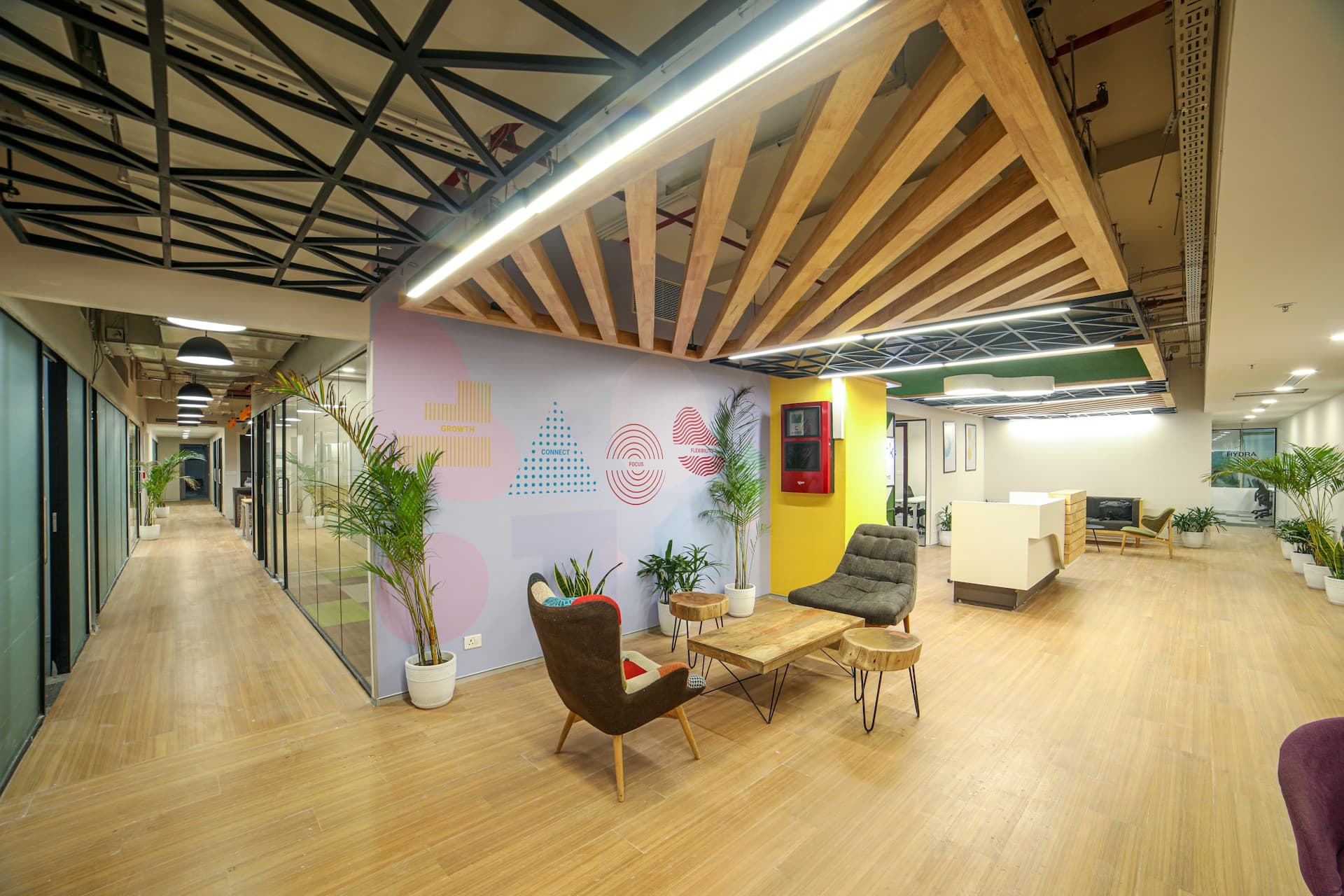
What is coworking and how has this way of working developed?
Coworking is more than sharing an office — it is a way of working built on flexibility, community and collaboration. In a coworking space, people from different industries and companies work together in an open, communal setting. They benefit from an inspiring atmosphere, modern workplaces and exchange with like-minded people.
The beginnings of coworking: where it all started
The idea of coworking as we know it today was coined in 2005 by Brad Neuberg, a software developer from San Francisco. He was looking for a way of working that combined the freedom of freelancing with the social and structural advantages of an office. His idea was a space in which the self-employed and small companies could work together and benefit from one another — without the hierarchies and obligations of a traditional company.
How it has developed since
Coworking has been booming since the early 2010s. Driven by digital transformation, the rise of remote work and a shift in working culture, coworking spaces now have a firm place in the modern world of work. According to current studies, not only the self-employed but more and more companies and corporations use flexible workplaces in order to offer their people inspiring, productive surroundings. In cities such as London, Berlin and Vienna there are countless coworking spaces.
Why coworking is so popular
Flexibility – users can book workplaces at short notice and stay independent.
Networks and exchange – coworking makes valuable contacts and cooperation possible.
Cost efficiency – no long-term leases, but models that scale for companies and freelancers.
Productivity and inspiration – dynamic surroundings encourage creativity and efficiency.
Coworking has long been more than a trend — it is an answer to the changed demands of the modern world of work.
In cities and in rural regions alike, coworking spaces offer flexible answers for a new generation of employees and companies.
The five core values of coworking spaces
Coworking spaces are more than jointly used offices — they are built on an open, collaborative culture that encourages innovation. So that people from different professional backgrounds feel comfortable and can work productively, there are five core values that play a decisive part in almost every coworking space worldwide.
CommunityCoworking is a social place to work. People do not only come together to work side by side but to exchange ideas, learn from one another and support each other. Networking, cooperation and joint projects often arise quite naturally in these inspiring surroundings. Many coworking spaces actively encourage community through events, workshops and shared activities.Tip 💡: anyone who does not only work in a coworking space but takes part in the community gets the most out of it.
CollaborationThe open character of a coworking space makes collaboration across industry and company boundaries easier. Start-ups meet established companies here, freelancers meet agencies — and new business ideas and partnerships often grow out of it. The philosophy is sharing rather than competing, since better answers can often be found together.
Openness (the open source spirit)Transparency, trust and the free exchange of knowledge are essential values in coworking spaces. There is an open, supportive atmosphere in which people meet as equals. Instead of keeping knowledge to themselves, coworkers help one another and so encourage a culture of innovation and creativity.
SustainabilityMany coworking spaces rely on sustainable concepts, whether through shared use of resources, energy-efficient buildings or green initiatives. Sharing workplaces reduces not only costs but the ecological footprint. Social sustainability plays a part too: many coworking spaces encourage diversity, inclusion and ethical ways of working.
Accessibility and flexibilityCoworking spaces should be accessible to everyone, whatever their profession, background or company size. They also offer a high degree of flexibility, since users can book their workplace as they need it — for a day, a week or over a longer period. That freedom makes coworking particularly attractive to digital nomads, start-ups and companies that prefer agile ways of working.
At a time when new work and flexible working matter more and more, coworking spaces are more than an alternative to the conventional office — they are the future of work.
What modern coworking spaces offer
Coworking spaces offer far more than a desk and wifi. They are flexible places to work that combine modern infrastructure, social interaction and professional services. What is on offer varies by location and by who it is for, but some central facilities and services have become standard in many coworking spaces.
Flexible workplaces and office infrastructureCoworking spaces offer various ways to work for different needs:Hot desks: flexible desks that can be used by the day or by the hour.Dedicated desks: permanent workplaces for regular users.Private offices: enclosed offices for teams or individuals.Meeting and conference rooms: rooms with modern technology for meetings and client conversations.Tip: 💡 : before booking you should check whether the space offers the working environment you want — open, quiet, or with separate office space.
High-speed internet and technical facilitiesPowerful, stable internet is the heart of any coworking space. Besides wifi there is often:Printers, scanners and copiers for administrative tasks.Phone booths for undisturbed calls or video calls.Presentation and video conferencing technology for meetings.
Communal areas and social zonesCoworking lives on exchange and community. Almost every space therefore has:Lounge areas with sofas for informal conversation or creative breaks.Cafés or kitchens with coffee, tea and snacks.Outdoor areas or roof terraces for working in the open air.
Events and networkingMany operators organise events that encourage exchange between members:Workshops and training on subjects such as marketing, IT or running a business.Networking events for the community, to make contacts.Coworking lunches or after-work gatherings to strengthen a sense of togetherness.
Business services and support for companiesSome coworking spaces offer additional services that are particularly interesting for start-ups and freelancers:A post and business address for a professional outward impression.Legal and tax advice through partner networks.Start-up accelerator programmes to support business ideas.
Specialised coworking spaces with particular offeringsSome spaces are aimed specifically at particular industries or needs:Creative coworking spaces with photo studios, workshops or music rooms.Tech and IT coworking with server rooms or prototyping labs.Coworking in the countryside with sustainable concepts and natural surroundings.
Who uses coworking spaces?
Coworking spaces have long since stopped being a niche answer — they are used by a wide range of professional groups. The self-employed, small companies and even large corporations — the advantages of flexibility, networking and professional infrastructure appeal to a broad audience.
Here are the most important user profiles and their reasons for working in coworking spaces:
Freelancers and the self-employed – flexibility and networkingWhy?No long-term leases, flexible ways to use the spaceProfessional surroundings without high fixed costsNetworking and winning clients through contacts on siteTip 💡: Many freelancers find not only a place to work in coworking spaces but new commissions and cooperation.
Start-ups and small companies – scalability and inspirationWhy?A cheaper alternative to premises of your ownThe ability to extend the team flexiblyInspiring surroundings with other foundersAdvantage 💡: Some coworking spaces offer start-up funding programmes, mentoring and access to investors.
Remote workers and digital nomads – working independently of locationWhy?Reliable wifi and working infrastructure worldwideCommunity and less isolation than working from homeDay or week passes for maximum flexibilityTrend 🔥 : Coworking spaces are increasingly appearing in destinations such as Bali, Lisbon and Thailand — perfect for digital nomads.
Companies and corporations – hybrid ways of workingWhy?Flexible office solutions for teams in different citiesCost savings through shared infrastructureEncouraging innovation through interdisciplinary exchangeHere are some examples of hybrid ways of working in practice:Field staff use coworking spaces as a stopping pointTeams work in hybrid fashion (3 days at home, 2 days coworking, for example)Firms book coworking spaces for creative workshops or offsite meetingsA trend for the future 💡: Large companies increasingly use coworking spaces as an alternative to office space of their own.
Creatives and artists – community and resourcesWhy?Shared studios, photo studios and maker spacesExchange with other creativesCheap use of professional equipmentTip 💡: Specialised coworking spaces for creatives often offer 3D printers, cutting plotters or music studios for shared use.
Working people in rural areas – an alternative to commutingWhy?Avoiding long commutesCommunity and social contactProfessional infrastructure for focused workA new development 💡: More and more rural regions are turning to village offices and rural coworking spaces in order to make work possible outside the cities.
Coworking spaces have long since stopped being meant only for freelancers — they are used equally by start-ups, corporations, creatives and commuters. Thanks to their flexibility, professional facilities and inspiring community they are an attractive way of working for the future.
The advantages of coworking: flexibility, networks and innovation
Coworking spaces have established themselves as a modern alternative to conventional offices. They offer numerous advantages for individuals, start-ups and even large companies. The most important advantages fall into three core areas: flexibility, networks and innovation.
Flexibility: working without a fixed commitmentOne of the greatest advantages of coworking spaces is maximum flexibility. Unlike conventional office leases with long terms, coworking spaces offer short-term use as you need it.Why does that matter?No long-term leases – a workplace bookable for a day, a week or permanentlyScalability – companies can flexibly use more or fewer workplacesWays of using the space to suit you – open working areas, individual offices or meeting roomsExample: a start-up can begin with a few workplaces and extend them flexibly as it grows — with no high fixed costs for an office of its own.
Networks: access to valuable contactsCoworking spaces encourage exchange with other professionals and entrepreneurs. The open working culture often gives rise to valuable contacts and cooperation.Why does that matter?Interdisciplinary collaboration – people from different industries work togetherNew business opportunities – projects and partnerships often arise spontaneouslyEvents and networking opportunities – many spaces organise regular eventsExample: A graphic designer meets a web developer and a marketing expert in the coworking space — a perfect combination for joint projects.
Innovation: raising creativity and productivityThe dynamic surroundings of a coworking space encourage creative thinking and make for an inspiring atmosphere.Why does that matter?A modern working environment – ergonomic furniture, creative rooms and inspiring designInterdisciplinary impulses – exchange with specialists from different fieldsMotivation and focus – working in a productive atmosphere without the distractions of homeExample: A freelancer works with more focus in professional surroundings than at the kitchen table at home, which raises productivity.Further advantages of coworking spacesCost savings – no high fixed costs for rent, equipment or office suppliesA better work-life balance – a physical separation of work and private lifeProfessional infrastructure – high-speed internet, printers, conference rooms and moreInternational locations – many providers make worldwide use possible
Coworking in rural areas: opportunities and potential
Coworking spaces have long since stopped being a purely urban phenomenon. In recent years village offices and rural coworking spaces have established themselves as important places of innovation for smaller towns and villages. They offer not only flexible workplaces but contribute actively to the economic and social development of rural regions.
New opportunities to work locallyCoworking spaces in rural areas let people work near where they live, without having to commute.Why does that matter?Less commuting – time saved and less strain on infrastructureA lower environmental burden – fewer CO₂ emissions from journeys to workMore attractive to skilled workers – companies can keep talent at rural locationsExample: An IT specialist who used to commute an hour into the city every day can now work in a local coworking space and win back valuable time.
Strengthening the local economyCoworking spaces bring not only new jobs but economic impetus for the region.Why does that matter?Spending power stays in the region – more turnover for local shops and restaurantsNew business models arise – start-ups and the self-employed can establish themselves more easilyCooperation with local companies – firms can bring in skilled workers flexiblyExample: A coworking space in a small town can be a central point of contact for local companies for consultations, meetings or events.
An attractive place to live for families and skilled workersMany people move from cities to rural areas when modern opportunities to work are available there.Why does that matter?A better work-life balance through living in the countryside with urban opportunities to workA locational advantage for rural communities – avoiding rural depopulationBetter infrastructure through digital services – fibre internet and shared servicesExample: Young families who decide against city life can keep working in well-connected coworking spaces without having to give up professional opportunities.
Encouraging innovation and collaborationCoworking spaces bring people from different industries together and so encourage creativity and new business ideas.Why does that matter?Interdisciplinary collaboration between freelancers, companies and public initiativesA start-up culture in rural areas – less dependence on large citiesInnovation hubs for sustainable projects, tourism, agriculture or technologyExample: A coworking space in a rural region can be a centre for sustainable agriculture or ecological start-ups.
Support through policy and funding programmesMany rural coworking projects receive funding in order to strengthen digitisation and economic development.Why does that matter?Financial support for setting up and running rural coworking spacesSupport for digital ways of working – remote work is increasingly accepted in many fieldsRegional networks and cooperation between communities, companies and universitiesExample: In Germany there are initiatives such as "Dorfbüros RLP" that deliberately support coworking spaces in rural regions.
With the right infrastructure and support through funding programmes, coworking spaces can make a decisive contribution to the future of rural work.
Current trends and the future of coworking
Coworking spaces have developed considerably in recent years. New ways of working, technological innovation and social change are shaping the sector. Demand keeps rising, in large cities and rural regions alike. But which trends will determine the future of coworking?
Hybrid working becomes the standardMore and more companies are turning to hybrid ways of working in which employees can move flexibly between the office, home and coworking spaces.Why does that matter?Employees expect more flexibility – coworking spaces offer alternatives to working from homeCompanies save the cost of permanent office spaceCoworking providers develop tailored solutions for firmsExample: Companies book flexible memberships in coworking spaces worldwide for their remote teams, so that employees can work according to location and need.
Rural coworking spaces on the riseCoworking is long since no longer a purely urban idea. The trend towards working outside the cities in particular is giving rise to more and more village offices and rural coworking spaces.Why does that matter?People are moving from large cities to the countryside – coworking makes flexible work near where you live possibleThe regional economy is strengthened – more jobs and new business modelsSustainability is encouraged – less commuting and ecological conceptsExample: Projects such as "Dorfbüros RLP" and "CoWorkLand" show how coworking ideas can establish themselves successfully in rural regions.
Specialised coworking spaces for different industriesWhile conventional coworking spaces are open to every industry, more and more specialised spaces for particular groups are appearing.Why does that matter?Coworking spaces focused on tech start-ups, creatives or sustainability offer tailored servicesSpecialised infrastructure such as photo studios, laboratories or makerspaces raises the appealCompanies deliberately look for communities that suit their businessExample: There are tech coworking spaces with high-end servers, creative spaces with art studios and green coworking spaces with sustainable concepts.
Technological innovation and smart officesDigitisation is changing coworking spaces too: automated processes and smart solutions are improving how they are used.Why does that matter?App-based booking systems make spontaneous workplace reservations possibleIoT technology makes for efficient use of space and energy savingsVirtual coworking offerings connect people worldwideExample: Smart offices rely on AI-supported workplace optimisation, contactless check-in and individual light and temperature control.
Sustainability and green coworking as the future standardSustainability is becoming a central idea for many coworking spaces. Many rely on ecological construction, renewable energy and shared resources.Why does that matter?Environmentally friendly coworking spaces reduce the carbon footprintSharing-economy principles encourage the shared use of resourcesSustainability matters more and more to companies and freelancersExample: "Green coworking" spaces use solar energy, energy-efficient buildings and sustainable materials for their office fit-out.
Coworking for companies and corporatesWhere coworking was once meant above all for freelancers and start-ups, large companies now use flexible workspaces too.Why does that matter?Companies save the rent of offices of their ownEmployees benefit from creative, inspiring surroundingsCoworking spaces adapt flexibly to company requirements
Coworking spaces are more than a short-term alternative to the conventional office — they have established themselves as a lasting answer for modern work. The future will be shaped by hybrid ways of working, technological innovation and sustainable concepts.
In the city or in the countryside, for freelancers or companies — coworking is here to stay.
Tips for choosing the right coworking space
What should you look for when choosing a coworking space?
No two coworking spaces are the same — choosing the right place can have a big effect on your productivity, your wellbeing and your professional network. Whether you are a freelancer, a start-up or a company, the following factors will help you find the perfect coworking space.
Location and access: the right place countsThe coworking space should be comfortable to reach, ideally by public transport or with parking.Questions to ask yourself:Is the space central, or near your clients and partners?Are there good bus and train connections, or parking?Are the surroundings attractive (cafés, restaurants, shops)?Tip 💡 : A space in a lively area with restaurants and shops within walking distance can be an advantage for breaks and networking.
The working environment and atmosphere: does the mood suit you?Every coworking space has its own culture and working atmosphere — from quiet, focused spaces to creative hubs with start-up flair.Questions to ask yourself:Do you need quiet surroundings or a lively network?Is there enough room, or does it feel crowded?Are there separate quiet zones, phone booths or meeting rooms?Tip 💡: Try a coworking space with a day pass before committing long term.
Infrastructure and facilities: what is on offer?A good coworking space should offer more than wifi and a desk.Facilities to check:Fast, stable internet for productive workMeeting rooms for client appointments or team meetingsPrinters, scanners, phone booths and other office toolsErgonomic furniture for comfortable workTip 💡: If you have many video calls, separate phone booths or quiet areas are a must.
Community and networking: who works there?A coworking space lives on its community — the people around you can influence your work and your professional growth.Questions to ask yourself:Are there regular networking events, workshops or meet-ups?Do people from your industry work there, or from a range of fields?Is the space open to cooperation, or rather anonymous?Tip 💡 If you want to benefit from a strong network, choose a coworking space that actively encourages events and exchange.
Flexibility and contract models: what are the options?Not everyone needs a permanent desk — check the booking models and contract terms.Important points:Are there flexible rates (day, week, month)?Can you book the space spontaneously, or are long-term contracts necessary?Are there additional services such as a business address or post handling?Tip 💡: If you travel a lot, a coworking network with several locations could be ideal.
Additional services and special offers: are there extras?Some coworking spaces offer particular comforts that make the working day easier.Possible extras:Free drinks (coffee, tea, water)Communal areas, roof terraces or quiet areasA gym or wellness facilities24/7 access for night workers and early risersTip 💡: Think about which additional services matter to you personally and whether they make working more pleasant.
In conclusion: what coworking means in the modern world of work
Coworking spaces have developed in recent years from a niche answer for freelancers into a central part of the modern world of work. They offer flexibility, connections and productive surroundings that bring numerous advantages to individuals and companies alike.
Coworking today: a fixture of working life
A range of professional groups currently benefit from coworking spaces:
Freelancers and the self-employed find a professional alternative to working from home.
Start-ups and small companies save costs and benefit from a dynamic community.
Corporations and hybrid teams use coworking spaces as a flexible complement to permanent office space.
Commuters and remote workers work more efficiently, without having to accept a long journey every day.
The rising demand for flexible ways of working shows that coworking is not a passing trend — it is an answer to the changing demands of the modern world of work.
The future of coworking: flexible, digital and sustainable
With current developments and new technology, coworking will keep gaining in importance over the coming years. The following trends will shape the future:
📌 Hybrid ways of working – companies increasingly turn to coworking spaces as a complement to home and the office.
📌 Rural coworking spaces – regional hubs make working outside the large cities possible and bring life to rural areas
📌 Technological innovation – smart booking systems, IoT-supported workplace optimisation and virtual coworking communities extend what is possible.
📌 Sustainability and green coworking Environmentally friendly ways of working that use resources sparingly are moving further into focus.
Coworking as the future of work
The world of work will keep changing, with growing flexibility, digitisation and decentralisation. Coworking spaces offer exactly what companies and employees need today: an efficient, inspiring and sustainable answer for modern work.
In the city, in the countryside or remotely — coworking has long been more than an alternative place to work. It is a key model for the future of work.
Related Articles

Flexible work in Europe 2025: a comprehensive case study
Hybrid work dominates the European world of work. Companies benefit from better talent retention and more efficient use of space. Employees gain time and autonomy. The data shows a market that has matured, with rising demand for coworking and digitally supported ways of working.
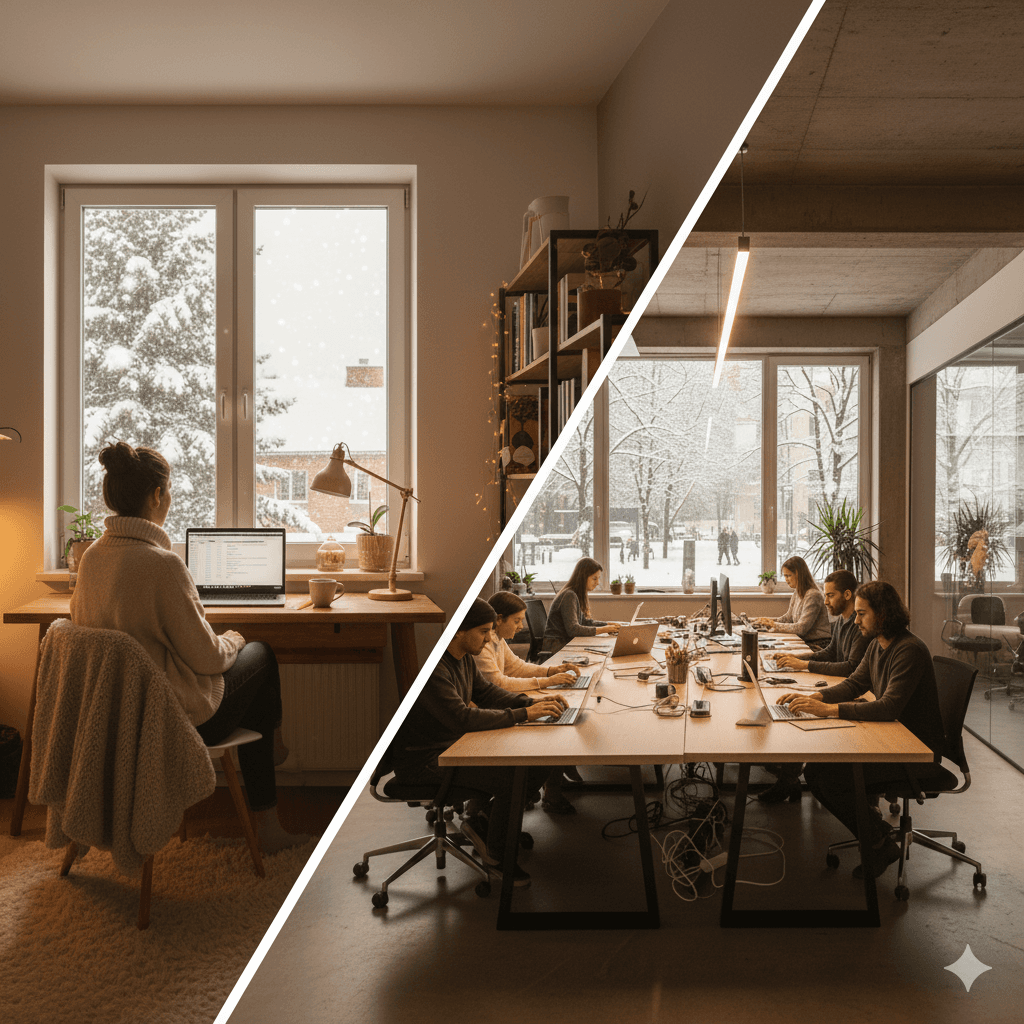
The cost advantages of a private office or coworking space in winter
Winter 2025 brings an unprecedented wave of costs for companies, freelancers and employees working from home.
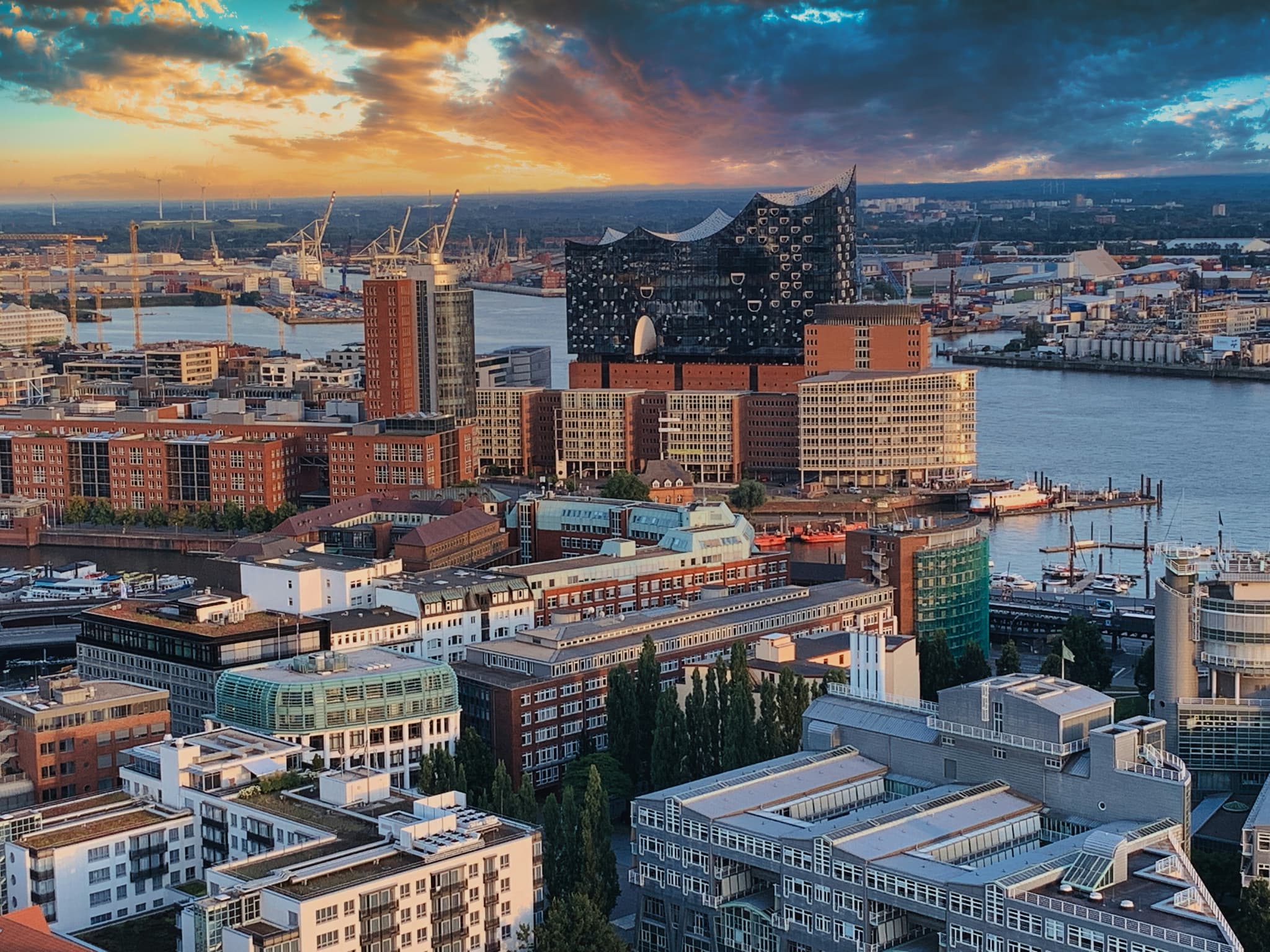
Renting an office in Hamburg 2025: rents, best locations and tips
Hamburg is one of the most interesting office markets in Germany. City centre, HafenCity or City-Süd: find out which locations offer the best opportunities in 2025, what rents look like and what to watch for in a contract.